A Theology of Idolatry for the 21st Century - Part 2: Why We Can't Stop Making Gods
BreakPoint Daily Commentary

Audio By Carbonatix
By John Stonestreet, Crosswalk.com

What happened to the ancient gods? How did Christianity so quickly replace idols that had been worshiped for more than a millennium? Today, Vice President of the Colson Fellows Program Michael Craven continues his theological reflection on idolatry and the Christian worldview.
——————————
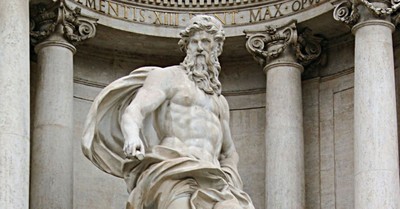
Zeus, Apollo, Artemis and the rest of the Greco-Roman pantheon once dominated the ancient world. But within a few centuries of Christ’s coming, the temples emptied, the sacrifices ceased, and the oracles fell silent.
Yet, humanity’s impulse to worship did not disappear. This is where the biblical story didn’t merely outlast paganism; it offered a truer explanation of reality.
The Bible teaches that human beings were created not merely as rational or political creatures, but as worshiping creatures. We were made in the image of God and designed to know Him, love Him and live under His gracious rule. Worship is not merely something we do. It’s woven into who we are.
That is why Scripture never imagines a world without worship. Instead, it asks a different question: Whom—or what—will we worship? John Calvin famously observed that the human heart is “a perpetual factory of idols.” He understood that idolatry is not a relic of ancient civilizations. It’s the fallen heart’s continual attempt to replace the Creator with something created.
The Apostle Paul explains this with remarkable clarity in Romans 1. Humanity did not stop worshiping. We simply “exchanged the truth about God for a lie and worshiped and served the creature rather than the Creator.” That exchange continues today. The human heart never stops worshiping. It only changes the object of its worship.
Many people insist they’re not religious. If religion simply means attending church or reciting prayers, perhaps fewer people are religious than in previous generations. But if religion means giving ultimate loyalty, trust, hope and identity to something, then our culture remains profoundly religious. The modern idols simply wear different names.
Perhaps the most obvious is the autonomous self. For much of human history, identity was understood as something to be discovered in relationship to God, family, community and vocation. Today, we’re told to look inward. Self-expression has become our highest good. In a shift not psychological but rather theological, the self no longer answers to a higher authority; it has become the authority.
Politics has likewise become increasingly religious. While political engagement is an important responsibility of citizenship, many Christians look to political movements to accomplish what only God can do. Elections promise salvation. Opponents become moral enemies. Political victories are celebrated with religious fervor, while defeats produce despair bordering on the apocalyptic. When politics becomes our ultimate hope, it has become our god.
Even worthy concerns can become idols when elevated to ultimate importance. For example, Christians should care deeply about God’s creation. Faithful stewardship is part of our biblical calling. But when concern for the environment becomes an all-encompassing explanation for humanity’s problems—complete with its own prophets, doctrines of guilt, rituals of atonement and visions of apocalypse and salvation—it has crossed the line from science into something resembling religion.
Perhaps the most subtle idols are those we construct inside the Church itself. God has given us extraordinary gifts—wisdom, planning, leadership, technology and organizational skill. Used rightly, these are faithful means of serving His purposes. But they become idols the moment we begin trusting them more than the God who gave them. Churches can quietly exchange prayer for planning, spiritual dependence for technique and the power of the Holy Spirit for the latest leadership strategy. None of these things is wrong in itself. But when our confidence shifts from God’s presence to our competence, we have fallen into one of idolatry’s oldest patterns: trusting the work of our own hands.
The greatest threat to the Church has never been that she would stop worshiping God. It is that she would begin trusting something other than God while still using His name.
Idols have always been excellent at changing costumes, promising what only God can give: meaning, identity, security, hope and salvation. But idols are cruel masters. They continually demand more while delivering less. They can never satisfy the deepest longings of the human heart because they were never designed to bear the weight of our worship.
This is why the First Commandment remains the foundation of every other commandment: “You shall have no other gods before me.”
God does not forbid idolatry because He is insecure or threatened by competitors. He forbids it because He alone is worthy of worship and because He alone corresponds to reality. Every false god, whether carved from marble or constructed from modern ideologies, ultimately distorts reality and diminishes those who worship it.
When Paul walked through Athens, he found a city “full of idols.” Today our cities look very different, yet our culture is no less devoted to finding ultimate meaning, identity and hope in created things. Every age believes it has outgrown idolatry. Every age is wrong.
The first Christians did not merely stop worshiping Zeus. They discovered Someone infinitely greater. Once they knew the true God, the false gods lost their power. The same remains true today. Our idols will not disappear simply because we expose them. They disappear when we behold Christ.
Photo Credit: ©Unsplash/PicsByJamesLee
John Stonestreet is President of the Colson Center for Christian Worldview, and radio host of BreakPoint, a daily national radio program providing thought-provoking commentaries on current events and life issues from a biblical worldview. John holds degrees from Trinity Evangelical Divinity School (IL) and Bryan College (TN), and is the co-author of Making Sense of Your World: A Biblical Worldview.
The views expressed in this commentary do not necessarily reflect those of CrosswalkHeadlines.
BreakPoint is a program of the Colson Center for Christian Worldview. BreakPoint commentaries offer incisive content people can't find anywhere else; content that cuts through the fog of relativism and the news cycle with truth and compassion. Founded by Chuck Colson (1931 – 2012) in 1991 as a daily radio broadcast, BreakPoint provides a Christian perspective on today's news and trends. Today, you can get it in written and a variety of audio formats: on the web, the radio, or your favorite podcast app on the go.


