What Christians Should Know About Their Jewish Root
Ministries > Discovering The Jewish Jesus with Rabbi K.A. Schneider

https://www.oneplace.com/ministries/discovering-the-jewish-jesus/
Facebook Twitter Instagram YouTubeRabbi Schneider sits down with Pastor Mike to explore why the Jewish roots of Christianity still matter for believers today. From baptism and Passover to sharing faith with Jewish people, discover how understanding the biblical Jewish foundation of the faith can deepen your understanding of Jesus and God’s Word.
**** BECOME A MONTHLY PARTNER - https://djj.show/YTAPartner **** DONATE - https://djj.show/YTADonate
Rabbi K.A. Schneider: Jews need Jesus just as much as Gentiles do. That's why Paul said he would give up his own life if his countrymen could be saved. He was talking about there is salvation in no other name but the name of Yeshua. I'm sitting down today with a good friend of mine, Pastor Mike, who pastors a congregation in Delaware, Ohio, called the Father's House. He and I became friends some years back when Cynthia and I walked into their congregation. I just saw the love of God and the glory of God on him in a very unusual way. We became close friends after that and still are to this day. Pastor Mike works here at Discovering the Jewish Jesus. Through our relationship, Pastor Mike fell in love with the Jewish roots of the Christian faith. I know that you were sharing with me that you thought that so many believers and pastors have things that they're thinking about and wondering about. You thought it would be a really good idea for you and I to get together and for you to throw me some of those questions that you think a lot of people would want to know the answers to.
Pastor Mike: Yes, Rabbi. Understanding the Jewish holidays, understanding how I can incorporate these things in my church, and understanding the Messianic experience. My first question is, does Judaic tradition matter for Christians today?
Rabbi K.A. Schneider: Think about this. John chapter four, Yeshua gets into a dialogue with the person that's often referred to as the woman at the well. Yeshua's at this well, and this woman comes to the well. Jesus begins this dialogue. He says to the woman, "Get me a drink." Then they get into the dialogue about Jews and Samaritans because she was a Samaritan. She says, "We Samaritans worship on this mountain, and you Jews worship on this other mountain." Yeshua said to her, "Woman, you don't know what you worship." Here's the key. Yeshua said to her, "We know what we worship, for salvation is from the Jews." Back to your question, does Judaic tradition matter for Christians? Yeshua said to this woman at the well, salvation for the world is rooted in Judaism. The rest of the world might have been religious in some way, but their practice was rooted in ignorance because the only ones that had revelation that came straight from Yahweh were Israel, the Jewish people. Yes, it matters. Jewish tradition, and I'm speaking particularly now not the traditions of men because some Jewish tradition is of men. Jesus actually spoke about that in Mark chapter seven. He said to the religious leaders of his day, "You're teaching your own tradition as if it's doctrine from God." I'm not talking about the tradition of men, but I'm talking about Jewish traditions that are rooted in the word of God. They matter very much. In fact, Christian baptism, you can't really understand Christian baptism in the deepest way without knowing the Jewish tradition or the Jewish foundation of what we call in Hebrew, you go to the Mikvah, which is a gathering of water. Jewish people were already going into the waters of immersion. They were already being baptized long before Jesus arrived on the scene. That's why before Jesus even showed up, they were going out to John the Baptist in the desert to be immersed, to be baptized. If Jewish people were getting immersed or baptized before Jesus came, what did it mean to them before Jesus came? What did baptism mean to the Jewish people before Yeshua came? If we understand that, we'll better understand what baptism should mean for us when we get baptized in the name of Yeshua, into the Father, Son, and Spirit in Yeshua's name. There's a lot of depth there. Even today, people that go to Israel and go on a tour to Israel, the tour guide will take them to many different places. In all these cities, they would build a Mikvah, which is the modern Hebrew way of saying baptismal tank. They would build a Mikvah before they would build a synagogue. That's how important it is in Judaism to be immersed in water. Think about this. This is so beautiful. We know that we're baptized in Yeshua, we're baptized into his death, burial, resurrection. Praise God. But I want you to know there's other levels to that. Think about this. When we look at the story of creation in the very beginning in Genesis one, the Spirit of God moved over the surface of the waters. Out of the waters, as the creation story continues, as the narrative continues in Genesis, the beginnings, then God spoke and he brought the dry land out of the water. Water was the womb of the world. God brought out what we know as the earth out of water. Water, primordial water, is the womb of creation. The earth was birthed out of water. Think about this. You and I, where were we before we appeared in the earth so that people could see us? We were in the water sac of our mother's womb. In order for us to be birthed into the world, that water sac had to burst and we had to come out of it. Just like the world came out of water, you and I individually were birthed out of water. Water is the womb of human beings. Think about that. Jesus said to Nicodemus, "Unless you be born again." Water is the womb of creation. It's the womb of humanity. When we go into the water in the name of the Father, Son, and Holy Spirit, and then are buried under it, and then come out of the water, what does this mean? It's like we're born again. We go into the waters of creation and come out a new creation in the name of Jesus. Old things have passed away, all things have become new. Yes, Christians could be greatly benefited by knowing Jewish tradition.
Pastor Mike: Oh my goodness, it's amazing. That's just a scratch of what you can get into by listening and sitting under Rabbi's teaching. The next question is, what elements of the Judaic tradition can be respectfully incorporated into church teachings to enrich the faith experience of the Gentile congregation?
Rabbi K.A. Schneider: I think the starting point for many Gentile congregations where this whole Jewish roots of the faith is new is generally the Passover. Jews for Jesus and other organizations used to do this years ago, travel all over doing Passover demonstrations in churches and helping churches to understand the rich connection between Passover and Christianity. I hesitate to use even the word Christianity because the word Christianity is not used anywhere in the Bible. It's not in the Bible. It's a term that was coined to describe the movement of people that believed in Jesus. In reality, the movement in which people become followers of Yeshua is a Jewish thing. That's why Jesus said salvation is of the Jews. People think of Christianity and Judaism as two different religions. In a real practical sense, it is two different expressions of faith. The reality is that Christianity is not a different religion than Judaism; it's the completion of Judaism. The first followers of Yeshua were Jews. They were called Nazarenes. Passover is a way that many typical Gentile Christian congregations begin to understand how faith in Jesus is related to what's revealed in what we would call the Church. Many would call the Old Testament, which in Judaism is called the Tanakh. Not just Passover, though. That's an entry point. That's the first place people get a little comfortable. They bring in somebody to talk about the Passover, even hold up the different elements: the Matzah, the shank bone, the Charoset, the bitter herbs, and everything. They talk about how it relates to Jesus and our redemption. That's fantastic. We want to move on. We don't want to say, "Been there, done that," and it's like we got that base covered and we never go back to it, which unfortunately is what happens many times. Think about this. How should we incorporate our Hebraic roots into our Gentile churches? If we think about the fact that everything that Yeshua did during his first coming, his death, burial, ascension, resurrection, all this was done in connection to God's appointed days as revealed in Leviticus 23. Many people call them Jewish holidays, but they're actually God's appointed days. Yeshua was crucified on Passover. All through the Gospels, they make an absolute point of saying to us, Jesus was crucified on Passover. He was buried during the next Jewish holy day called Unleavened Bread. He rose on the next Jewish holy day called First Fruits. The Spirit of the Lord in Acts chapter two was given when 120 Jews were gathered together in that upper room. 1,500 years earlier, God had appeared to them at Mount Sinai in glory and fire and smoke as the mountain quaked. Then God spoke from heaven and wrote his law on the tablets of stone. All of a sudden, the same God that appeared at Sinai appears again in the same glory in the upper room and baptizes them in the Ruach HaKodesh, the Holy Spirit. If Jesus' entire earthly ministry was fulfilled exactly according to the pattern of the spring holy days—crucified Passover, buried on Unleavened Bread, raised First Fruits, Spirit given on Shavuot, which is the Hebrew word for Pentecost—these things are important. Looking forward, we should with common sense anticipate that his second coming is going to be connected with the fall holy days. Rosh Hashanah or Yom Teruah, Yom Kippur, and Sukkot, the Feast of Tabernacles. These are all separate teachings because there's so much here, but it just shows us this is important. You do not support the root; the root supports you. As you get regrafted into the Jewish roots of your faith, your faith and understanding is going to go to a whole new ascended level.
Pastor Mike: I know mine has. I mean, I'm just on a completely different level with God and understanding his word like never before. That was a huge revelation for me in understanding that Jesus had communion on Passover. We have our regular communion every Sunday or however often we do it.
Rabbi K.A. Schneider: Here's something that's interesting concerning communion. This is one interpretation, and I want to be careful about not being too strong about this, but I want to put it out there. I think it's awesome to do communion whenever you feel inspired. Anytime I'm in a church somewhere and they're serving communion, I'm excited and thankful and in love with Jesus and I take communion. I love it. My wife Cynthia takes communion every day personally. Get this. When Yeshua instituted what we call the Lord's Supper or communion, he did it during a Passover meal. When he lifted up that matzah and that juice and he said, "As often as you do this, do this in remembrance of me," the question that we ask is, as often as you do what? What did Yeshua mean when he said in instituting communion, "As often as you do this, do this in remembrance of me"? I believe he was speaking about Passover. As often as you celebrate Passover and eat the Passover matzah and drink the Passover juice or wine, do it in remembrance of me.
Pastor Mike: When you teach, there's just a depth of wisdom that people should be able to pick up from. So the next question is, what are effective ways to foster collaborations and shared experiences between Gentile and Messianic congregations?
Rabbi K.A. Schneider: Wow, that's a beautiful question. There's a song that I used to love by Joel Chernoff. It went, "Jew and Gentile, one in Messiah, one in Yeshua, one in the Olive Tree." I might have the words just slightly off, but it was so beautiful. I loved it because it was about Jew and Gentile coming together as one in Messiah. I just feel like when we can come together as Jew and Gentile and love God together, that's God's purpose. That's part of the mystery of the fulfillment of the Gospel. I feel like there's so much that we can gain from understanding the Jewish roots of our faith. But I also want to say to you, Pastor Mike, there's so much that I have gained from anointed Gentiles. It goes both ways. There's a cross-pollination. We both have something to give each other.
Pastor Mike: You were a Messianic pastor or as you were called Rabbi for many years. Based on your experience, what suggestions and considerations do you have for a church that wants to adopt Messianic practices?
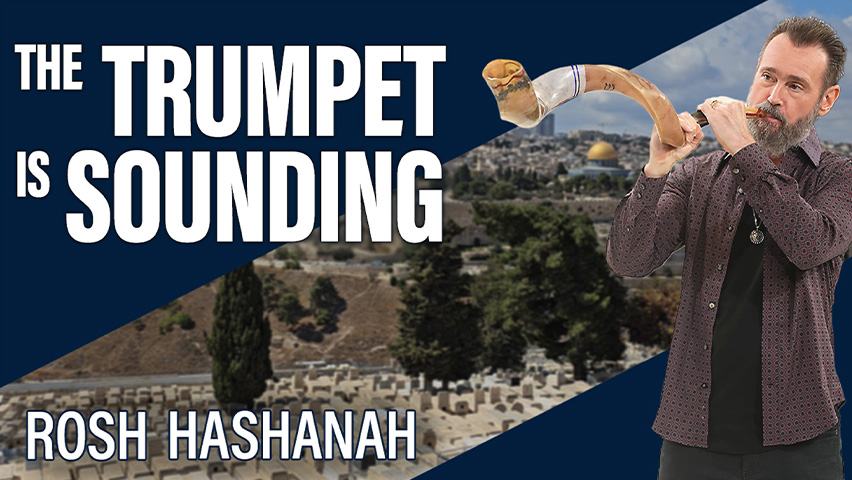
Rabbi K.A. Schneider: Number one, I think start celebrating the holy days. Start celebrating Passover. Start celebrating Yom Teruah or Rosh Hashanah because it commemorates the Lord's return. You can get more teaching on our website about all these different holy days. But I would say the second thing that we can do as Gentile congregations is start incorporating the Jewish holy days into your calendar, teaching your congregation what these holy days mean and how they relate to Yeshua in both his first and second comings.
Dustin Roberts: You're listening to Discovering the Jewish Jesus, and Rabbi Schneider will be right back. But first, I'd love for you to stay connected with us by signing up for Rabbi's Seeds of Revelation newsletter. Each week, you'll receive a powerful devotion direct from Rabbi, along with other ministry updates, including when Rabbi will be live. It's a simple way to stay uplifted and informed. Go to discoveringthejewishjesus.com and click "Stay Connected" today. Your support is fueling a powerful move of God through the Discovering the Jewish Jesus Israel Awakening initiative. Right now, we're equipping and strengthening congregations throughout Israel. We're launching evangelistic outreach campaigns in the land. Lives are being changed as Israelis encounter the love of Jesus. Stand with us today and boldly proclaim the Gospel in Israel clearly and without compromise. If God is moving you to join us, go to discoveringthejewishjesus.com. Now, back to the second half of today's lesson.
Pastor Mike: Can you provide a brief comparison between traditional Jewish beliefs and the beliefs held by Messianic Jews?
Rabbi K.A. Schneider: Well, thank you. There's first of all a lot in common. We both believe in God. We both declare that there's one God. Judaism is the religion that caused monotheism to spread to the entire world. We as believers know that there's one God. However, I want to be very clear in saying that the Jewish community would not look at many Christians as being monotheistic because of the fact that we declare we believe in Father, Son, and Spirit. We would perhaps describe our faith in a triune God, in one God that's revealed himself in a multidimensional fashion. For example, the most famous Jewish declaration is called the Shema. "Hear, O Israel," Deuteronomy 6:4. "Hear, O Israel, the Lord our God, the Lord is one. Shema Yisrael Adonai Eloheinu Adonai Echad." Hear, O Israel, the Lord our God, the Lord is one. This is the most famous declaration of Jews. Orthodox Jews want to die with those words on their lips. But their understanding of that word "Echad," the Lord is one, the Hebrew word for one is "Echad," their understanding of that word one is a singular unity. They cannot fathom the concept that God is Father, Son, and Spirit. They can't understand that. Biblically speaking, here's what we find in the word of God. The scripture says in Genesis, a man shall leave his father and mother and cleave to his wife, and the two shall become "Echad." The same Hebrew word there in the Shema. "Shema Yisrael Adonai Eloheinu Adonai Echad." That same word "Echad" is used when a man and woman come together and become one. We see that that word used in the Shema is actually used in relationship to a man and woman becoming one, not as a singular unity, but as a compound unity. It gives precedent for the fact that just because we're declaring that God is one, it doesn't mean that he's a singular unity necessarily. It can mean that he's a compound unity. Same principle we see in the biblical text regarding the tabernacle. When all the pieces of the Mishkan or tabernacle were joined together—the tabernacle that God told Moses to build in the wilderness—when all those pieces were joined together, the tabernacle became "Echad." All those pieces became one. Similarly, I'm just making the case here that I believe there's one God. But I think that biblically, despite what Jewish tradition teaches, we see in the Hebrew Bible that, for example, Daniel had a vision of the night. He saw into the last days and he saw at the end of time the Son of Man came up to the Ancient of Days. This is in the book of Daniel. There was given to the Son of Man the kingdom and the authority and the power to reign even as God reigns. Yeshua, of course, quoted from the Psalms. Yeshua said to the Pharisees, "Who was David speaking of when he wrote in the Psalms, 'The Lord said to my Lord'?" Traditional Jews believe that there's one God. We as believers in Yeshua believe there's one God, but traditional Jews can't understand how you guys could say there's one God and yet you talk about the Father, Son, and Spirit. Here's the answer to that question. How can God be one and yet be manifest as Father, Son, and Spirit? How can he be manifest in three persons? Because the Father and the Son had a relationship with each other as different personalities. Jesus prayed to the Father. The Father spoke to the Son. The Spirit proceeds from the Father and the Son. How can this be? How can God be one and yet inside him is his Son who's in his bosom and the Spirit is emanating from them and the Spirit's manifested as a person too? The scripture says that the Holy Spirit can be grieved. That means the Spirit's not just a force; he's a person that can be grieved. How can we understand where God came from? You can't understand how God could be one and yet manifest himself multidimensionally as Father, Son, and Spirit. It doesn't make logical sense, but let me ask you this. Help me to understand logically how God could have always been. You can't explain that. There's no cognitive explanation how there's a cause—God—he's the first cause, and he himself has no cause. How can something come from nothing? How could God have come from nowhere? Even as we can't understand that because it makes no sense, our mind short-circuits. We can't comprehend it. It's above the human capacity of the mind. We can only think in terms of cause and effect, but God has no cause. He is the first cause. Even as we can't grip how God came from nowhere and that he's always been, neither should we expect to understand how God as Spirit is manifested as Father, Son, and Spirit. We don't have to understand it. God's ways are above our ways and his thoughts are above our thoughts, even as the heavens are higher than the earth. In terms of Jewish mindset and Christian mindset, that's an interesting separation regarding understanding the oneness of God, where Jews understand the oneness of God as a singular unity and Christians understand the oneness of God as a compound unity. Briefly, the other thing to touch on before we move on is in regards to the Messiah. Orthodox Jewish thought believes that the Messiah will just be a man. A special man, an anointed man, but he'll just be a man. Orthodox Jews believe that the purpose of the Messiah will lead the Jewish people back to the observance of the Torah, which will in turn release blessing to the world. Jewish thought also believes that there's a potential Messiah in every generation. Jewish thought is that there's a Messiah in the world right now. If there's enough Jews that are practicing Torah, the potential Messiah will be manifested. There's a potential Messiah in every generation. That's Orthodox Jewish belief in the Messiah. We, as believers in Yeshua, believe that Messiah is more than just a man and he's going to do more than lead Jewish people back to observance of the Torah. We believe that the Messiah is God coming to earth clothed in humanity who, according to Isaiah 53, took our place by dying for our sins and that the blood of Messiah is what has released us from the debt and guilt of our sin. There's a much more focused view of who Messiah is and what he looks like in Christian thought as opposed to the Orthodox view of the Messiah.
Pastor Mike: Unbelievable layers of wisdom in that whole answer there. Thank you. I have one of my favorite questions. As a believer, what is the best way I can share my faith with Jewish people to show that Jesus is Messiah?
Rabbi K.A. Schneider: Let me first of all say that we need courage. The first thing is courage. We could give people all the information in the universe, but still, probably most people, no matter how much information you give them, they still wouldn't share their faith with a Jew. They'd be too intimidated because Christian people think that Jews are God's chosen people, which there is a special call on the Jewish people. No doubt about that. Jesus said to the Jewish people, "Unless you believe that I am he, you'll die in your sins." Jews need Jesus just as much as Gentiles do. That's why Paul said he would give up his own life if his countrymen could be saved. He was talking about there is salvation in no other name but the name of Yeshua. He said, "How can they call upon him whom they've not heard, and how shall they hear unless someone tells them? How can they be saved unless we tell them?" First of all, I could give you all the information about sharing your faith with a Jewish person, but the first thing you need is courage. Secondly, if we're going to inspire people to share their faith with Jewish people, don't be afraid of making a mistake. You're going to make mistakes. I remember when my daughter first started driving. She was great going forward, but she kept on hitting trees when she went backward. She made some mistakes just like we all do. We all make mistakes. Unless we're willing to go through a time of making mistakes, we're never going to learn. You can't be afraid of making a mistake. You're going to mess it up. It's okay. You're going to get good by experience. Courage, and you can't be handicapped by being afraid of making a mistake. Number three, the best thing that you can do is share your testimony. You look at a Jewish person, you just say to them, "I love you." You say to your Jewish friend, your doctor, your neighbor, whoever, "I love you. I just love Jewish people. I love you, and I love the fact that I believe in your God, that through Yeshua, I believe in your God. I just want you to know I love you. Have you ever read Isaiah chapter 53?" You can just leave it right there. You don't have to harvest every witnessing encounter. Sometimes your role is just to plant seeds. Sometimes you can go further. The more knowledge you get, the further you can go. You can start sharing specific Messianic prophecy. You can give them a book. One of the books that I've written which is a really strong tool is called Messianic Prophecy Revealed. It goes through all the prophecies in the Hebrew Bible and shows how Yeshua fulfilled them. This conversation could go on for a long time and we could even do some role-playing at one point about how to witness to a Jewish person and the different arguments that come up. The bottom line is if you just love God and want to obey him, make up your mind to have courage because courage is not having no fear; courage is doing what you know you should do even when you do have fear. Courage is moving through the fear. You love God, you know God's called you to share, you exercise courage. Don't get caught up on being afraid of making a mistake. Just go for it. Tell them how much you love them. Tell them how you love their God, that you're so thankful that Jesus brought you into a relationship with their God, and ask them if they have ever read Isaiah chapter 53. You should check it out. Many of the people that you share with, Jewish people, they don't even know about Isaiah 53. They don't even know the Hebrew Bible. Most Jewish people do not know the Hebrew Bible. You just say, "Hey, look it up in the Tanakh, in the Old Testament." They don't call it the Old Testament. "Look up Isaiah chapter 53 and read it. Next time I come and see you, I want to ask you what you thought about it." Just provoke them and don't worry if they get mad because sometimes the first step to them coming to faith is getting mad. Number three, I like that one. Just do it. Tell them what God's done for you.
Pastor Mike: Thank you, Rabbi. That's amazing. I have one more question. How can I lead my congregation to support Israel and the kingdom of God?
Rabbi K.A. Schneider: There's so many different opportunities to do that. I'm sure many of our viewers have seen different organizations raising money to support Israel, sending over supplies, goods, army supplies, etc. What we're doing here at Discovering the Jewish Jesus is focusing on Israel's salvation. We're focusing on bringing the Gospel inside Israel for impact and breakthrough. I encourage those of you that feel inspired, go to discoveringthejewishjesus.com, support the ministry. I want to encourage you, if God's touched you, do it today. When you think about the world today and what's happening, people are giving money to all different places in Jerusalem, Israel, but how many of them are supporting the Gospel going in? That's powerful. Beloved, I say this with authenticity before the Lord. Discovering the Jewish Jesus is one of the best and most important ministries that you can partner with on the earth. We are reaching the world with the Gospel and, more precisely today, we're reaching Jewish people with the Gospel, which is the mandate of the church. Paul said to the Jew first and also to the Greek or to the Gentiles. Yeshua came and he first brought the message to the Jewish people, and then the message spread from there around the world to Jerusalem, Samaria, and all the nations of the earth. We are broadcasting right now in 97 percent of the homes in Israel that have television sets, as well as a big portion of the entire Middle East. By you becoming a monthly partner with this ministry, you take a step forward and be part of God's steps on the earth to reach around the globe to gather in a harvest of precious Jewish souls. When Jewish people come to faith in him, that creates the spiritual climate for the Lord's return. Now is the time. I believe more than ever before to bring the good news of the Jewish Messiah Jesus to them. You can be a part of doing that by becoming a monthly partner today.
Dustin Roberts: Amen. To partner with Discovering the Jewish Jesus today, call us right now. Our number is 800-777-7835. You can also give online at discoveringthejewishjesus.com or you can send a check in the mail. Our address is Discovering the Jewish Jesus, PO Box 777, Blissfield, Michigan, 49228. That's PO Box 777, Blissfield, Michigan, 49228. We are passionate about sharing Jesus with people all around the world and especially in the holy land where our broadcast reaches 1.5 million Israeli households and a significant number of homes in the Middle East. This is so close to our hearts because Rabbi grew up in a Jewish household and he's lived a firsthand experience of the deep transformation that Jesus can bring to someone's life. We want others to experience that too, and it's your generosity that helps make it happen. To become a monthly partner, visit us online and give at discoveringthejewishjesus.com or call 800-777-7835. Now let's wrap up with Rabbi sharing the blessing that God entrusted to Aaron, the high priest of Israel. I hope you have a wonderful weekend from all of us at Discovering the Jewish Jesus.
Rabbi K.A. Schneider: The Aaronic blessing in the book of Numbers chapter six is not a blessing that comes from an impersonal being out there somewhere in the heavens. This special blessing comes from a person, Yahweh, God Almighty, our creator and maker. So receive God's blessing into your life right now. The Lord bless you and keep you. The Lord make his face shine on you and be gracious to you. The Lord lift you up with his countenance and the Lord give you, beloved one, his peace. And now in Hebrew: Yevarechecha Adonai veyishmerecha. Ya'er Adonai panav elecha veyichunecha. Yissa Adonai panav elecha veyasem lecha shalom. God bless you and Shalom.
Dustin Roberts: This program is produced and sponsored by Discovering the Jewish Jesus. I'm your host, Dustin Roberts. Come back next week when Rabbi Schneider shares a hard-hitting study on choosing God in difficult times. That's Monday on Discovering the Jewish Jesus.
Related Episodes
Make the Choice To Praise God | Psalm 34 Season 1
Monday, August 31
How to Walk in Victory Every. Single. Time.
Saturday, August 29
A Time for Thanksgiving | Yahweh’s Fall Holy Days
Thursday, August 27
Related Videos


About Discovering The Jewish Jesus
Discovering The Jewish Jesus with Rabbi Schneider imparts revelation of Jesus' Jewish heritage and His fulfillment of messianic prophecy. Questions of how the Old and New Testaments tie together, and how Yeshua completes the unfolding plan of God, are answered with exceptional clarity. Through understanding the Old Testament and its prophetic nature (with Yeshua as its fulfillment) your faith is strengthened, increased relationship and intimacy with the LORD is discovered, and an end-times vision of life is crystallized. This is an end-times ministry, strengthening the church and calling her to be a readied bride for the return of the Bridegroom, Yeshua Ha-Mashiach (Jesus The Messiah).
About Rabbi K.A. Schneider
Messianic Rabbi K.A. Schneider, a Jewish believer in Jesus and end-times messenger of the LORD, delivers the Word of the LORD with true passion of the Holy Spirit. At the age of 20 years old, the LORD appeared to him, supernaturally, as Jesus, the Messiah. He has since pastored, traveled as an evangelist, and more recently, served as rabbi of a messianic synagogue.
Rabbi K.A. Schneider imparts revelation of Jesus’ Jewish heritage and His fulfillment of messianic prophecy. Questions of how the Old and New Testaments tie together, and how Yeshua completes the unfolding plan of The Almighty Yahweh, are answered with exceptional clarity.
Central to the LORD’s plan is Israel and the Jewish people. Romans 11:11 explains that the Gentile believer has been chosen by God to bring the witness of the LORD to the Jewish people. As this message of Yeshua is brought back to, and received by, the Jewish people, they will say, “Baruch Haba B’Shem Adonai” – “Blessed is He who comes in the Name of the LORD!” and in so doing, usher in Yeshua’s return (Matthew 23:39).
Through understanding the Old Testament and its prophetic nature, with Yeshua as its fulfillment, the viewer’s faith is strengthened, increased relationship and intimacy with the LORD is discovered, and an end-times vision of life is crystallized. “Discovering The Jewish Jesus” is an end-times ministry, strengthening the church and calling her to be a readied bride for the return of the Bridegroom, Yeshua Ha Mashiach (Jesus The Messiah).
Contact Discovering The Jewish Jesus with Rabbi K.A. Schneider
Mailing Address
Discovering The Jewish Jesus
P.O. Box 777
Blissfield, MI 49228
Telephone
1-800-777-7835


