Mark 4
Ministries > Thru the Bible with Dr. J. Vernon McGee
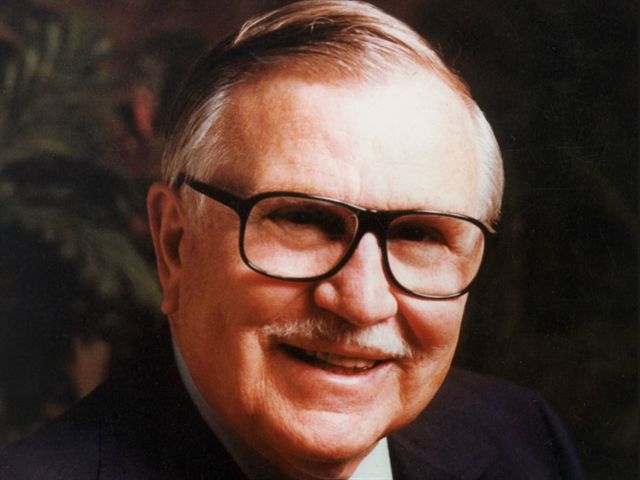
https://www.oneplace.com/ministries/thru-the-bible-with-j-vernon-mcgee/
Facebook Twitter Instagram YouTubeWe all love a good story. Jesus used stories called parables to teach spiritual truth to those who hungered and thirsted after righteousness. While unbelievers just thought He was nothing more than a good storyteller, many lives were changed by the gospel truths found in the parables.
References
Steve Schwetz: Welcome to Through the Bible. Today we travel with Dr. J. Vernon McGee through chapter 4 of Mark, the Gospel of Action. You know, up until now, we've seen the action mainly take place in the form of miracles. Well, in this study, that action shifts as we begin to learn about Jesus through action-oriented parables. So grab your seat on the Bible bus, and while you do that, I want to share a few letters from our fellow travelers. Ashish Kumar from Gujarat writes this. We received the Bible study, which has greatly helped us grow closer to God. Since it is in our Dodia language, God's word is much easier to understand. We listen while working together as a family and also with our home group. The explanations of scripture are clear and helpful, making the word easier to understand and remember. This provision has been very helpful for us, and we thank the Lord for it. Our heartfelt prayer is that it may reach many more people so that they too may be blessed. And Devendra from Maharashtra shares this. For the past few days, I have been regularly watching the Sachi Vakan program, and that's TTB in Hindi, by the way. It has truly become a blessing in my life. Earlier, when I tried to read the Bible, I found it difficult to understand its deeper meaning. However, through your teaching, my perspective toward reading the Bible has completely changed. The explanations shared have made the word of God much clearer and more meaningful to me. Now, instead of feeling confused, I feel encouraged and excited to open the Bible. It strengthened my faith and brought spiritual clarity and joy into my heart. And then finally, Brugu from Tripuro writes, I am a regular viewer of your programs in the Kokborok language. Earlier, I did not know much about God or his word. There was little joy and peace in my heart, and I was searching for the truth but couldn't find it. My life began to change when I started studying with you. I began to understand God's word more clearly. The teaching about Lot and the destruction of Sodom and Gomorrah deeply touched my heart. I truly appreciate the clear and faithful teaching of the Bible because through this program, I have come to know the Lord. Well, if you're part of the world prayer team, thank you for being an important part of what God's doing around the world. You know, we've been praying this week for listeners like these throughout India, and it's so exciting to see how God's using his word to draw people to himself and help them grow in their faith. You know, if you'd like to be on our team, and there's always room for more, there's another way that you can do that by being a world prayer team member. Next week, we travel through North America, and we're going to hear remarkable stories of what God's doing through his word and then learn how we can pray for these carrying the Gospel forward. To join us on the world prayer team, it's super easy. You can from our app sign up. You can also go to ttb.org or just call us at 1-800-65-BIBLE if you need some more information. Let's pray. Heavenly Father, thank you for your word. And would you give us now ears to hear and hearts that are ready to receive your truth. May your spirit teach us. May your spirit draw us closer to Jesus. It's in his name we pray. Amen. Open your Bible to Mark chapter 4 as we go through the Bible with Dr. J. Vernon McGee.
Dr. J. Vernon McGee: Now as we return in our study of the Gospel of Mark to the fourth chapter, I know by now many of you have your Bibles open, and also you have our notes and outlines which we are sending to those who want to go through the Bible with us. And they are very helpful to you. And if you do not have them, we urge you to write in and ask for them. We'd like to hear from you new listeners. We just ask you read along with us, get the notes and outlines, and then listen to the program. Now when we come here to the fourth chapter, we have several parables here, and then the miracle of him stopping the storm. And we've been over this ground already in Matthew, except there's one particular parable he gave here that you will not find in Matthew. And it's the only part, and that makes it outstanding as we shall see. You have here the parable of the sower. And that's a declaration. You have the parable of the sower exposition. Then the parable of the candle, and the parable of the growth of the seed, and the parable of the mustard seed. And then his power over nature demonstrated in stopping the storm. Now we said at the beginning that the Gospel of Mark is the Gospel of Action, and the emphasis is upon miracles. But you would think when we get to this chapter that the emphasis now is off of miracles and it's on parables. But you'll notice that the parables Mark gives are parables of action. And we find here that each one of these parables is really a very moving thing. And so we find here the emphasis is still upon action even when we have the parables. Now I take again this parable of the sower, and let me read several verses. And he began again to teach by the seaside. And there was gathered under him a great multitude so that he entered into a ship and sat in the sea. And the whole multitude was by the sea on the land. Matthew gives us quite an emphasis at this point. And he says that he went out of the house and he entered into a ship on the sea. And his very action, as Matthew records it and as Mark records it, is very symbolic. Now the house generally illustrates the house of Israel. And the seas represent the nations, the Gentiles. His very action is he turns from his people in these parables, and he goes to the world. And that actual is the background of these parables then they need to be looked at in the context of a global situation that I think is very important to see. Now these took place, by the way, during the height of his ministry. He was very busy, and the pressure was upon him. And he was weary physically. In fact, he was tired as we see in this chapter when it says in verse 38, he was asleep in that ship at sea. And he was asleep because he was weary. Now we find here that he taught them many things in parables and said under them in his doctrine. He taught them many things in parables. And Jesus adopted the use of parables at this point in his ministry. And by the way, he was about halfway through his 3 years ministry. And he used certain parabolic illustrations before the woman at the well, for instance. And then he talked to her about the water of life. And then he told his disciples he'd make them fishers of man. And he said the fields were white under harvest. And he made use of salt and light and the foundations of rock and sand in the sermon on the mount. But those are not parables. But now he has adopted the parabolic method. And the parable here of the sower, he says, hearken, behold, I went out a sower to sow. And I would recommend those of you that got our book on Matthew that you refer to it at this particular point because there we went into a great deal more detail than we go into in Mark. And then we read, and I'm reading now verse 4, it came to pass as he sowed, some fell by the wayside, and the fowls of the air came and devoured it up. Some fell on stony ground where it had not much earth. And immediately it sprang up because it had no depth of earth. But when the sun was up, it was scorched. And because it had no root, it withered away. And some fell among thorns, and the thorns grew up and choked it, and it yielded no fruit. Now these are the three areas where the seed fell. And they represent the unsaved that do not accept the Gospel, do not accept the word of God. And these are the reasons. The wayside, the fowls devoured them. The devil takes away the word. The stony ground, the sun withers it. They don't have much deepness at all. And then there's the thorny ground, and the thorns choked it. Now we have the good ground here. He says and other fell on good ground. It yielded fruit that sprang up and increased and brought forth 30, 60, and 100. Now we have here only 1/4 that fell on good ground. And that means these are the ones that are saved. They receive the word. But you have different degrees of fruit bearing here, 30, 60, and 100 fold. And you remember the Lord said to his own there on the way to the Garden of Gethsemane when he told him, I am the genuine vine. He said, I want you to bring forth fruit, more fruit, and much fruit. Three degrees of fruit bearing, you see. And they are the ones that are his. Now he puts up, you notice here, a danger signal. He said under them, he that hath ears to hear, let him hear. The idea is stop, look, and listen. You've come to a railroad crossing. And obviously some missed it because in verse 10, when he was alone, they that were about him with the 12 asked of him the parable. They missed it. They didn't quite understand it at all. And verse 11, he said under them, unto you it's given to know the mysteries of the kingdom of God. But unto them that are without, all these things are done in parables that seeing they may see and not perceive, and hearing they may hear and not understand lest at any time they should be converted and their sins should be forgiven them. Now these verses contain a certain degree of ambiguity. And I'd like to give you a quotation here I think might be helpful. And let me read it. It's from my book on Mark. The reason that Jesus resorted to parables from this point to the end of his ministry is arresting. His enemies rejected his teaching, and the multitudes had become indifferent to spiritual truth. They were actively interested in his miracles, but not the spiritual application. He now resorts to the use of parables to enlist their interest. The antagonistic attitude of his enemies and the lethargic indifference and incomprehension of the multitude necessitated a change to the use of parables so that those who hungered and thirsted after righteousness would be filled. And those who wanted spiritual truth would have their eyes open. Now you recall in 1 Corinthians, we have this same thing. Paul says in 1 Corinthians 2 9 and 10, but as it is written, eye hath not seen nor ear heard, neither have entered into the heart of man the things which God hath prepared for them that love him. But God hath revealed them unto us by his spirit. For the spirit searcheth all things, yea, the deep things of God. Now dropping down to verse 13, he says, which things also we speak, not in the words which man's wisdom teacheth, but which the Holy Spirit teacheth, comparing spiritual things with spiritual. But the natural man receiveth not the things of the Spirit of God, for they are foolishness under him. Neither can he know them because they're spiritually discerned. Now this is a great principle that Paul put down, and it's still applicable today. The use of every means to try to get people to understand spiritual truth. We use the radio. I use a great many illustrated messages in the church I've served and in other places. I find that this calls attention to people that understand things that they wanted to understand. And they must want to understand them before these things can be made real to them. I would like to just make this statement that if a person's heart and his eyes are open and he wants to know, then the spirit of God is going to bring in the great truth to his heart and make these things quite real and living to him. We sometimes use the expression. I know I use it in my ministry that say it, and it's rather careless statement that you'll be lost if you don't accept Christ as your savior. Well, that's not true, really, friends. The truth is you're already lost whether you accept him or not. But the point is, and the way it should accurately be stated is you will continue to be lost, friends, if you do not accept Christ as your savior. You're not on trial. If you're a lost person, you are lost. And now it's your reaction and reception of the word of God that's going to determine whether you'll be saved or not. Will you trust Christ? Will you accept him as savior? And so many say, well, now you begin to move into a philosophical realm, and this is not reality. You're asking us to do something that is rather superstition. Well, I don't think that it is. And I can illustrate it. We were down in Florida, Miss McGee and I, and we'd bought tickets from an airline that had gone on strike, and we were going back on another airline. And they told us our tickets we'd bought in Los Angeles were good. And so I called this particular airline, and I told him that I had this ticket. The girl there looked it up, and she said, yes, you do. And the plane leaves tomorrow morning at this particular time, and you'd be at the airport about 30 minutes ahead of time. And you know, friends, I never met that girl to this good day. I just believed her. And so Miss McGee and I went to the airport the next morning. And you know, sure enough, our ticket was good. And sure enough, there was a plane that left, and we got on it. And we did ever better that by faith. Don't tell me today, friends, that faith is not a reality. God is given his word. He asked you to trust Christ. And this is the way that the seed falls. What kind of a hearer are you today? Are you the one among thorns? Are the wayside, the thorny ground, or does the word fall on good ground? That is the important thing. But all of us are lost. The reception of the word determines whether we're saved or not. But when people say, well, if you don't accept Christ, you'll be lost. My friend here lost before. That is a misnomer to say that. Now he gives the explanation here in verses 13 through 20. And let me just run over it since we've been over this ground before, and we'll come to it again. By the way, in the Gospel of Luke, the sower is the son of man, and the seed is the word of God. And the birds by the wayside are Satan. Matthew told us that. And the stony ground hearers are those who let affliction and persecution turn them from God. That's the flesh. Oh, how many people today are letting the flesh keep them from God. Then there's the thorny ground hearers are those who let the cares of the world distract them. That's the world. So many people today are letting the world shut them out from God. And then the good ground hearers are those who are converted genuinely by the word. And they bring forth only percentages of fruit. Only 1/3 bring forth 100 fold. Now you have here that's a parable of action, you see. Even when Mark records parables, they are the parables of action that the Lord Jesus gave. Then you have the parable of the candle here. And believe me, you're dealing with action when you're dealing with light. And he said under them as a candle brought to be put under a bushel or under a bed and not to be set on a candle stick. That's verse 21. For there is nothing hid which shall not be manifested, neither was anything kept secret but that it should come abroad. Now what we have here is this parable of the candle, and it's of action. Light creates responsibility. Man must act who receives the truth, and we are held responsible to the degree that we've had light given us. The point is you and I are in darkness until now. And we get the impression today that man is a sinner because of the fact of his weakness or he's a sinner because of the fact of his ignorance. No, Paul says in Romans very candidly that man when they knew God, they glorified him not as God. Man is a willful sinner. He's a willful sinner. That's the kind of sinners all of us are. And the light that comes in will create a responsibility. And I'm confident that there will be different degrees of punishment, but doesn't change the status of an individual. We're lost before the light comes in. And if we don't accept it, we're lost afterward. We're lost. That's our condition. That is if we do not accept it. Now if any man have ears to hear, let him hear. This is action. God demands action on your part. And faith, you see, is action. It's acting upon what God is said. How important that is today. By the way, that illustration I use, you know, we could still be sitting down there in the airport in Miami, Florida, if we have said, well, we got a ticket, and we've come this far, but we're not sure about the plane. And we've going to sit right here. We'd still be sitting there. You have to act on the fact that here you've got a ticket. You have to believe that that plane's going to carry you where you're going. We got on it, and it did. And I must say I get on a plane to this day with a lot of fear and trepidation. But I get on. Faith demands action, friends, and that kind of action. That's what it means to believe. Now you have this unusual parable that our Lord gave here that only Mark records it. And it's of action. He said, so is the kingdom of God. Now you remember I said the kingdom of God and the kingdom of heaven, they're two terms that are used. The kingdom of God is synonymous with the kingdom of heaven here. But the kingdom of God's not identical with the kingdom of heaven. The kingdom of God's the larger term. The kingdom of heaven is in the kingdom of God. For instance, the state of California is in the United States. But it's not the United States, in spite of what the Chamber of Commerce says. But it is in that. And so you can say that you're in California. I'm in California now, and I'm also in the United States. Both are true. Now he talks about here the growing of the seed as a man should cast seed into the ground and should sleep and rise night and day, and the seed should spring and grow up. He knoweth not how. And today we don't know too much about the growing of seed. For the earth bringeth forth fruit of herself. First the blade, then the ear, after that the full corn in the ear. But when the fruit is brought forth immediately, he putteth in the sickle. The harvest is come. Now this is a parable of power and action, the growth of seed into a plant and fruit is a mystery to this day. You see the old bromide is true. Great oaks from little acorns grow. But after all the years of scientific progress, there is not much more that can be added to this. The label of osmosis adds little to our understanding. All the reservoir of knowledge has been increased. Now let me give a quotation here that I wrote after a trip back from the East. And it's in my notes on Mark. These notes were prepared on the train from Atlanta, Georgia to Los Angeles, California during the month of March. Spring had already come to the southern section of our country. Trees were budding. Flowers were blooming. The azaleas in Mississippi were gorgeous, and the farmers everywhere were plowing and planting. No one could tell just what was happening, but everyone was reacting to it and accepting it with full enjoyment and happy anticipation of the future harvest. Tremendous power was being released in nature as nitrogen took on the garment of green. If God let it go it once, it would make a hydrogen bomb sound like a Chinese firecracker. Now this is a parable of the power of the word to work in our hearts and lives. What a marvelous parable this is here. Then you have the parable of the mustard seed here. We've had that before. And you'll notice that mustard is not food. It's a condiment. And the growth of a mustard seed into a tree is unnatural. It's the outward growth of Christendom in great organizations, big churches, large programs geared to human energy and not to the Holy Spirit. And the birds and the branches are not even good either. They represent Satan. Now we find here that our Lord leaves off teaching, and they go out into the sea. He wants to rest. He's tired. He goes to sleep. And then you have this miracle of him quieting the sea. And did you know the thing that made them fear? It says they feared exceedingly and said one to another, what manner of man is this that even the wind and the sea obey him? It was not so much the fact he quieted the storm but the way that he did it. It had just leveled out. There was a sudden calm. And this miracle was so great that it made these men afraid. What a wonderful thing it is. He puts us in the storms of life in order that we might come closer to him and that we might know him better. Jesus, savior, pilot me or life's tempestuous sea. Unknown waves before me roll, hiding rocks and treacherous shoal. Chart and compass come from thee, Jesus, savior, pilot me. So until next time, may God richly bless you, my beloved.
Steve Schwetz: Are you facing rough seas right now? Well, as we've seen in Mark, even the disciples found themselves caught in a storm that they couldn't control. What a comfort to know that when trouble does come, and it does, doesn't it? You're never alone. If you'd like to know about how Jesus is able to bring peace in every situation, including life's storms, you can click on How to Know God in the Through the Bible app or over at ttb.org. Now to keep growing in God's word, we got a couple of resources that we think might help. First, you can download our free Bible companion for Mark. And for the notes and outlines Dr. McGee mentioned, you'll find them in our free digital resource Briefing the Bible. And you can get it right in our app or online. That address again is ttb.org or call 1-800-65-BIBLE and request a printed abridged edition. We're back in the Gospel of Mark next time. I'm Steve Schwetz, and I'll save you a seat.
Guest (Male): Through the Bible is a 5-year study of God's entire word, and together we discover God's purposes in history and our lives, found only when we believe in Jesus Christ. Do you know him yet?
Related Episodes
Mark 2:23—3:35
Thursday, October 22
Mark 2:1-23
Wednesday, October 21
Mark 1:16-45
Tuesday, October 20
About Thru the Bible
Thru the Bible takes the listener through the entire Bible in just five years, threading back and forth between the Old and New Testaments. You can begin the study at any time. When we have concluded Revelation, we will start over again in Genesis, so if you are with us for five years you will not miss any part of the Bible.
Other Thru the Bible Programs:
Thru the Bible - Minute with McGee
Thru the Bible - Questions & Answers
Thru the Bible - Sunday Sermon
About Dr. J. Vernon McGee
John Vernon McGeewas born in Hillsboro, Texas, in 1904. Dr. McGee remarked, "When I was born and the doctor gave me the customary whack, my mother said that I let out a yell that could be heard on all four borders of Texas!" His Creator well knew that he would need a powerful voice to deliver a powerful message.
After completing his education (including a Th.M. and Th.D. from Dallas Theological Seminary), he and his wife came west, settling in Pasadena, California. Dr. McGee's greatest pastorate was at the historic Church of the Open Door in downtown Los Angeles, where he served from 1949 to 1970.
He began teaching Thru the Bible in 1967. After retiring from the pastorate, he set up radio headquarters in Pasadena, and the radio ministry expanded rapidly. Listeners never seem to tire of Dr. J. Vernon McGee's unique brand of rubber-meets-the-road teaching, or his passion for teaching the whole Word of God.
On the morning of December 1, 1988, Dr. McGee fell asleep in his chair and quietly passed into the presence of his Savior.
Contact Thru the Bible with Dr. J. Vernon McGee
Mailing Address
Thru the Bible, Inc.
P.O. Box 7100
Pasadena, CA 91109
In Canada:
Box 25325,
London, Ontario
N6C 6B1
Phone Number
(626) 795-4145 or
(800) 65-BIBLE (24253)


