The God Who Leads - Part 1
Ministries > Unlimited Grace with Bryan Chapell
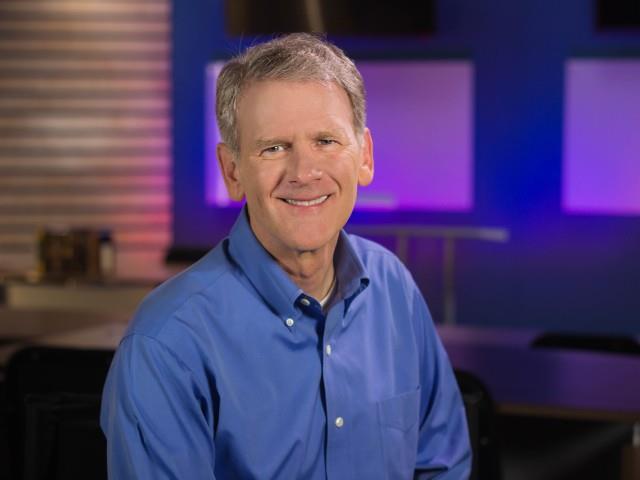
Pastor Bryan shares a lesson from Psalm 77. Dr. Chapell points us to the difficult and honest tone of this passage as a reminder that God invites us to come to him, even in our pain.
Guest (Male): What's God going to do? I put my needs, my prayers in front of him, and now I'm going to watch and see what God does. It's hard for believers to do that, to actually say, "I'm going to put it in the Lord's hands and watch." Because what we want to say is, "I want God to do what I want," instead of saying, "I'm going to put it in the Lord's hands and watch and see what he does."
Guest (Male): So glad you joined us for today's Unlimited Grace, the audio broadcast ministry of pastor and author Bryan Chapell. In today's episode, Pastor Bryan shares a lesson from Psalm 5. Dr. Chapell reminds us of God's assurance to us of his security and love for the challenges that we face in life. You can find this lesson and many others when you visit unlimitedgrace.com. And while you're there, look for Pastor Bryan's book, *The Multi-Generational Church Crisis*. This compelling book asks the question of the church, what could be accomplished in the name of Christ if we could better understand each other? Let's hear now from Dr. Bryan Chapell as he shares the lesson, "The God Who Leads."
Bryan Chapell: Well, you are scared, aren't you? My words from my father to me in an account I've probably told you more than once. But if it's repeated in my mind, it's because it's important to me, and I thought of it again this weekend as my wife is taking our youngest daughter to an internship in Texas and she'll be gone for a while. And I couldn't help but remember that first trip of my father taking me to a college. Now I look back and I think how did this happen? I was going to a school I'd never visited, a town I did not know, people I did not know, and yet here I was on this grand adventure. As we left our home in Memphis and drove up to Chicago up Highway 55, I know that I was first very excited. And in the early part of the trip, as my dad was driving with me alone in the car, I was just talking and just babbling on about how fun this was going to be. But the further we got from home, from what was familiar and family, an internal dialogue began to happen in my brain something like this: "Are you nuts? What in the world are you doing going so far from home with people you don't know at all?" And the further we got from home, the closer we got to Chicago, the greater my anxiety got, and my anxious regular conversation in the early part of the trip became increasing quietness. Until finally at some point my father looked over at me and said, "You're scared, aren't you?" I nodded yes. And then my father did something I hope I never forget. He pulled off to the side of the highway right there on Highway 55, stopped the car, put it in park, turned to me and said, "Now you listen to me. I don't know if you will do well or poorly at that school. I don't know what they will require of you. But you are my son. I'm your father. And you will always have a home in my house. That will never change." Did it take away all the challenges? No. But it gave me a foundation of security and love for the challenges that would come. I knew I could always go to my father with the challenges that were before me. And Psalm 5 is not really anything different. It is our Heavenly Father providing assurance of his security and love for the challenges that we face in life. The reason so that we would know what we can ask of him. What can we ask of God? Well, the opening's pretty plain. We can ask God to listen. I mean, that's right from the beginning. Verse 1: "Give ear to my words." It's said again in verse 1: "consider my groaning." Verse 2 it's there again: "give attention to the sound of my cry." But each of those petitions to hear is followed by the assurance of verse 3: "O Lord, in the morning you hear my voice." That there is the sense that we can call out to God and that he will listen, and we can be confident that he will listen. How do we actually call out to God in a way that we can be confident that he will be listening? Well, the psalmist reminds us we can call out early. After all, the instruction here is ultimately for us to pray early. Verse 3: "Lord, in the morning you hear my voice." Again in verse 3: "In the morning I prepare a sacrifice for you and watch." Now the fact that we would pray in the morning is not making our prayer more holy. It's not making us more holy. It's the idea that before we start the day, there is this priority to our thoughts. That before we face the challenges of the day, we would talk to the creator of the day. And we would say to him, "Lord, I need your help. I want to make sure you're my priority before I go through all the other things in my life." And that's not always easy to do. Life can be pressed. I think of the priorities of early prayer in an internet prayer that some of you are aware of. It was popular a few years ago. This prayer begins this way: "Dear Lord, so far I've done all right. I haven't gossiped. I haven't lost my temper. I haven't been greedy, grumpy, nasty, selfish, or vain. But Lord, in a few moments I'm going to have to get out of bed, and then I'm going to need a lot more help." And it's that understanding that creates the early prayers. Lord, I'm going to need a lot more help, and I want to approach you before I approach the challenges, which will surely come. How do we do that? Listen, if some of you already pray over your coffee at the breakfast table, great, it's a wonderful habit. Others of us, we kind of get up and we rush to the bus or we rush to the first appointment or we've got all the playing going on in our brains of the priorities that we're facing and it just kind of presses prayer away. But what if you could, just as a change of pattern for a while, as you're on the bus, as you're driving toward work, just mark the store or the signpost that you might say, "I'm going to repeat the Lord's Prayer there." Or you know that just at the time that you're on the road, there's going to be a newscast that starts and just as the newscast starts, say, "I'm going to ask the Lord to help me before the day." And we create those markers, those signals in our experience where we put the day before the Lord. And the reason we do that is we're expecting God to listen. And as we are expecting God to listen, we're expecting him to begin to control the priorities of our lives. That means we're not just to pray early, but we're actually to pray earnestly to the Lord as what makes him not only hear us but encourages our hearts that he is listening. If you just look at verses 1 and 2, you begin to recognize that three times there is this persistency of the psalmist's prayer. "Give ear to my words," verse 1. "Consider my groaning," verse 1. "Give attention to the sound of my cry." It's this persistent prayer, the willingness to go back again and again. But right with it is this passion before the Lord. I'm not just going to repeat formula words. How is the psalmist praying? The end of verse 1: "consider my groaning." Verse 2: "give attention to the sound of my cry." I so love the words of Romans 8:26 as the disciple there echoes what I know about my own heart. We don't know how to pray. Can you imagine the Apostle Paul says that? We don't know how to pray. So the Holy Spirit prays for us with what? Groanings too deep to utter. As though we recognize there are those places in life where I don't even know what to say. I might not be able to call the words to mind, and yet that is permissible to God. That the cries of my heart, the groanings of my spirit can be put before the God as prayer. We don't just have to say all the thees and thous. Say it in some formula way we do it in church. Just talk to God personally, earnestly. And the willingness for him to be addressed personally is there in verse 2: "give attention to the sound of my cry, my king and my God." The "my king" and the "my God" are the psalmist taking the most royal and esteemed words that we have for God, that he is the king of all creation, that he is Elohim, the royal name for God in the Old Testament. And yet right before is just that little two-letter pronoun: my king, my God, who hears my cry. As though he is infinite in glory and majesty and power, but he's mine. And as personal as are my cries, so personal is my king. It's again that gospel just in a nutshell, that he is infinite in power and glory and yet intimate in his care. It's why the Emmanuel principle of all of scripture holds so much: he's God with us. Yes, he's God, yes, he's great, yes, he's glorious, and yet he's with us. So that we can even say, "You're my king, you're my God, and you hear my care." He's actually just that personal to us. And for that reason, we can pray when we pray that early morning prayer with expectancy that he's going to hear and that he will act. Verse 3: "O Lord, in the morning you hear my voice. In the morning I prepare a sacrifice for you and watch." Now again, because we're this side of the cross, we sometimes forget the implications. "I come to you in the morning and offer," says the psalmist, "my morning sacrifice." Here was somebody who knew sin and weakness in his life, and yet he says, "God has made a way for me to come to him." It's by sacrifice, that offering of animals in the Old Testament. But Jesus Christ was being prefigured, the one who would know the worst about us: our sin, our failings, our weakness, and say, "But I'm preparing a way for you." And so now as we approach God, we recognize that that sacrifice of Jesus offered once for all allows us to come to God even early in the morning and say, "God, listen to me." Even when I cannot form the words, you're my God and I offer to you my cry. And he's made a way for us to come through Jesus. Knowing the worst about us, knowing our failures, knowing our weakness, there is a way. And so we say, "God, I'm going to ask your help." And then the wonderful words, "and watch." What's God going to do? I put my needs, my prayers in front of him, and now I'm going to watch and see what God does. It's hard for believers to do that. To actually say, "I'm going to put it in the Lord's hands and watch." Because what we want to say is, "I want God to do what I want," instead of saying, "I'm going to put it in the Lord's hands and watch and see what he does." Even in the Bible, we see Christians struggling with that. You remember the message in Acts 12? Peter has been arrested and put in prison. Four squads of Roman soldiers are around him. He's chained between two Roman soldiers. And he's praying in the prison for release, and people are praying in the house church of John Mark. They're praying for his release. And in the night, an angel comes to Peter, hits him on the side and says, "Get up!" And the chains fall off. The prison doors open. He begins to walk out toward the town and an iron gate just opens of its own accord in front of him and Peter thinks, "This isn't real. I mean, I know I've been praying for it, but I must be dreaming." And then he begins to approach the house where believers are praying for him. Praying that he would be released. And he knocks on the door, and a young girl named Rhoda comes to the door and hears that it's Peter calling and knocking, and she runs back to the people who are praying and says, "Peter's been released!" And they say, "No way. No, you're crazy. He's..." And so Peter just keeps knocking. "Hey, it's me! What you are praying for has happened." And even the believers have trouble believing it because they're not really watching. They don't have the eyes that say, "He listens and he hears." But if we are praying, "God, you're the creator of this day. I'm going to put it before you. And I'm going to say it as personally and expectantly and persistently as I can. I'm going to put my cries before you." Then here's what we know: he listens and we have the right to call to him because he has said he listens.
Guest (Male): You're listening to Unlimited Grace, the audio broadcast ministry of pastor and author Bryan Chapell.
Guest (Male): It may seem hard for younger Christians to believe, but people over 50 were raised during an era when 90% of Americans identified as Christian. These older believers were once part of a majority group that understood the mission of the church was to take control of our culture, to halt its evils. At the same time, Christians under 50 have lived their entire lives perceiving themselves as a minority that needs to make credible their faith to a secular, pluralistic culture. These distinct experiences and perceptions have a profound impact on the priorities different generations have for church ministry. It's no wonder that younger and older believers don't always see eye to eye. In his new book, *The Multi-Generational Church Crisis*, Dr. Bryan Chapell asks the question, "What could be accomplished in the name of Christ if we could better understand each other?" This practical and hopeful book is backed by thorough research revealing how to open the lines of communication, appreciate the experiences that shaped each generation in your church, and unite in one mission to impact your community and the world. You can request your copy of *The Multi-Generational Church Crisis* when you donate online at unlimitedgrace.com or by calling 844-4-GRACE. That's 844-414-7223.
Guest (Male): And now, more from Bryan Chapell on today's Unlimited Grace.
Bryan Chapell: He listens, and we have the right to call to him because he has said he listens. That's not all. He promises to lead as well. I mean, we have a right to ask God not only to listen to us but to lead us. Verse 8 is the summary of things that have preceded: "Lead me, O Lord, in your righteousness." Yes, lead me. How does that actually happen? You know, verses 4 to 6 are descriptions of the way that the Lord leads and they are descriptions of warnings. And we don't always like reading these words, that God on the path of leading us has put guardrails in place. And he said, "Listen, you need to be aware of these warnings." And he finds three ways of saying the same thing: God and evil cannot exist in the same place. If you're expecting to be led by God, then recognize God and evil cannot exist in the same place. It's kind of like that old law of Newtonian physics, right? That two solid objects cannot exist in the same space at the same time. Or even kind of the more modern Pauli exclusion principle that even at the subatomic level, two objects cannot exist at the same time in the same space. Except the psalmist is talking about a spiritual level. If you're expecting God to lead you, then recognize that evil and God do not coexist on his path of leading. How does he say that? The warnings are actually pretty intense. Verse 4: "You are not a God who delights in wickedness. Evil may not dwell with you." That word "dwell" is actually a Hebrew word that means a brief sojourn just for a brief time. Evil and God cannot coexist in the same place of leadership even briefly. Not even for a moment. "I'll get to God later, need to do this right now." No, it's not the path of God's design. Even for a moment, briefly God is not going to lead that way in his path. Verse 5: "The boastful shall not stand before your eyes. You hate all evildoers." So what if I begin to take credit for what I'm doing? "I got this diploma, I got this achievement, I got this career by my smarts, by my wiles, by my..." well, really? You know, the cliché of old westerns is what? "This town ain't big enough for the two of us," right? The reminder here is your heart is not big enough for two kings. And if what you're saying is "I'm going to rule" or "What I've accomplished is by my rule," God is saying, the boastful shall not stand before him. If I think I'm standing, I'm accomplishing, I'm achieving because of all that I am and all that I do, it's just my talent, my gifts, my wisdom, God is saying ultimately you will not stand. Ultimately there is a fall that occurs as a consequence of that boastfulness. Verse 6: "You destroy those who speak lies. The Lord abhors the bloodthirsty and deceitful man." You cannot expect the lie to result in God's blessing. And when the psalmist goes on to talk about God abhorring the bloodthirsty and deceitful man, you wonder what's actually in his brain. We don't know when David wrote this, but some think that terminology right there means he is thinking of his own son, Absalom. Who by boasts and lies and deceit stood in the gate at Jerusalem and convinced those who were of high rank in Jerusalem to turn against his own father. And in that rebellion, 20,000 people died. And David is saying, "You think the lie is going to be good for a while. But if the way you're getting somewhere is by deceit, by not telling, by hiding, ultimately that results in the hurt not just to you, but to other people too." This is not the path that God intends. If we are following his path, his will, his leading, it's not going to come by hiding and by deceit. Now we struggle with this because we're a church that talks about grace a lot. Wait, wait, what's all this stuff about consequence and warnings? I mean, this doesn't sound very gracious to me. But the reality is if God didn't love you, he wouldn't warn you. The warnings are actually part of his grace. Here are the guardrails for the path that God intends, the road of his purpose. And so he says, "Listen, there's warnings here." And part of our growing up, as it were, is actually hearing the warnings as love. Some of you know this already. I mean, one of the marks of adolescence is to equate permission with love. "Well, if you really loved me, you would let me go to X. If you really loved me, you would let me date X. If you really loved me, you would let me have that car." And so we begin to equate love with permission. Whereas if you move into adulthood even a little bit, you recognize that love with no warning, love with no prohibition is not love at all, it's just not caring. God says, "I care enough to warn." And in these warnings, he is telling us of all the things that are the guardrails to help us on the path of life. But then he tells us something else. If the warnings are the guardrails and we're trying to travel down the path that is good for us, where're the headlights? And as it were, that's verse 7. As God is talking about the headlights as it were of his guidance which comes from all things: it comes from worship. Do you see that in verse 7? "But I, through the abundance of your steadfast love, will enter your house. I will bow down toward your holy temple in the fear of you." In worship we learn of the abundance of God's love. Now I know and you know there are people who say, "I don't need the corporate worship of God's people. I'm going to worship God in the woods, that's where I see the beauty of his creation." And listen, you can actually do that. I mean, if the heavens declare the glory of God, then no question, creation is one place you see the glory of God. But in worship, what are we meant to see? The abundance of God's love. The word "love" there is, some of you already love this word, it's the Hebrew word "hesed," which means covenantal love as opposed to contractual love. Contractual love says, "If you love me, I'll love you back. If you satisfy me, I will keep loving you." Covenant love is heavenly love whereby God has a prior commitment to people who he knows will fail him. My covenantal love is abundant.
Guest (Male): That's Pastor Bryan Chapell, and you've been listening to Unlimited Grace. If you've been blessed by this message and would like to hear more from Dr. Chapell, I would encourage you to visit unlimitedgrace.com. Please be sure to join us next time as once again we endeavor to put Christ at the center of our efforts so that lives might be transformed by his unlimited grace.
Guest (Male): This ministry is brought to you by Unlimited Grace Media and continues to be made possible with your generous financial support.
Related Episodes
The God Who Answers - Part 2
Friday, July 10
The God Who Answers - Part 1
Thursday, July 9
A 7-11 Song - Part 1
Tuesday, July 7
About Unlimited Grace
Unlimited Grace is dedicated to spreading the gospel of God’s grace to all people. We desire for believers everywhere to serve God through faith in His grace that frees from sin and fuels the joy of transformed lives.About Bryan Chapell
Bryan Chapell, Ph.D. is the Stated Clerk Pro Tempore of the Presbyterian Church in America (PCA), based in Lawrenceville, GA.
Dr. Chapell is an internationally renowned preacher, teacher, and speaker, and the author of many books, including Each for the Other, Holiness by Grace, Praying Backwards, The Gospel According to Daniel, The Hardest Sermons You’ll Ever Have to Preach, and Christ-Centered Preaching, a preaching textbook now in multiple editions and many languages that has established him as one of this generation’s foremost teachers of homiletics.
Dr. Chapell is passionate about sharing the truth of God's grace with others, because it provides the freedom and fuel for transformed lives of joy and peace.
He and his wife, Kathy, have four adult children, a growing number of grandchildren, and lives rich with friends, fishing and faith.
Contact Unlimited Grace with Bryan Chapell


